At a family reunion in about 2008 Gay McNeil presented family photos with some of her recollections of family life in Whitby. These are incomplete but included the following:
World War 1
“My father left the Merchant Navy to join the Royal Navy Reserve at the outbreak of war in 1914. Based at first at Ramsgate where he was in the Dover Patrol, guarding Allied shipping in the Channel. Later he was based at Penzance. My mother with her son Herbert (b. 1913), left Whitby where she lived with her parents, to live in lodgings in Ramsgate. She wrote home regularly mostly using picture post cards. One card showing policemen holding the remains of a bomb dropped on Ramsgate. Several Sunday School children were killed.”
Another card shows the Royal Victoria Pavilion at Ramsgate on the seafront.

Note the current fashion in ladies’ hats and gentlemen wearing panama hats. On the actual shoreline is a row of bathing machines. This scene would have been pre-war.
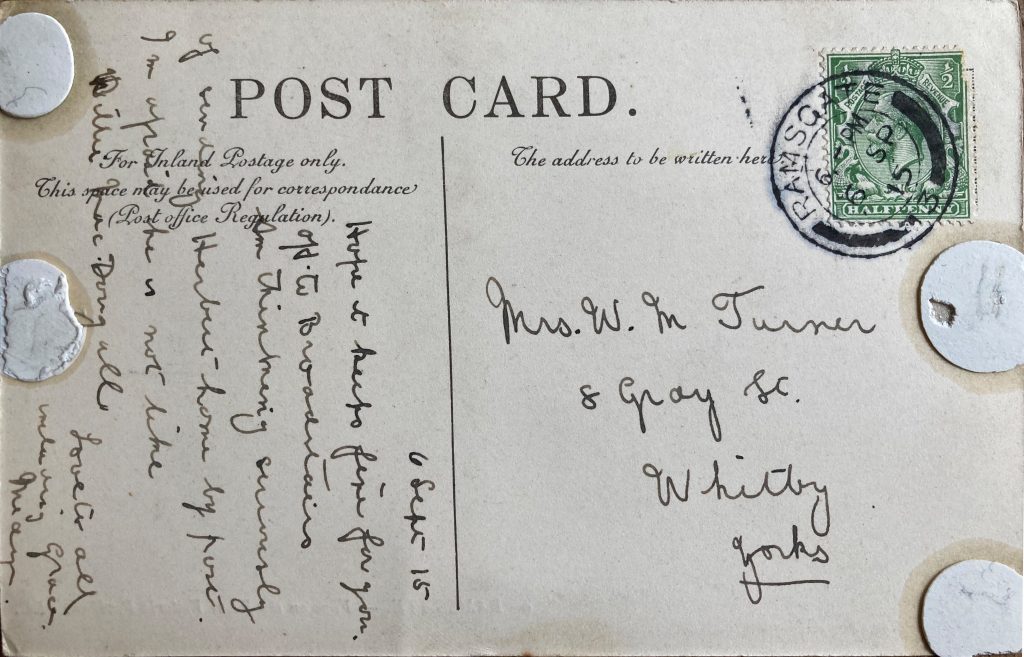
The message on this card:
“I’m thinking seriously of sending Herbert home by post. I’m afraid he is not like Will MacDougalle”. This must have been a reference to a neighbour’s well behaved child at home in Whitby or some cartoon character.
World War II at home
“The first thing we did was have the dog Peggy, an Airedale put down. She was 10 years old and as a nervous dog keeping her in war time was not an option.”
“One Saturday morning about eleven o’clock there was a huge roar of aircraft together with machine gun fire, then all was silent. We later heard that a German aircraft had been brought down and it had crashed next to Bannial Flat farm. My father was on leave at the time and we all trudged through the snow to see it —about 2 miles away.
On that same leave my father brought home for me a black kitten. I had wanted a rabbit but a kitten was much more fun, and it was more acceptable to my mother than a rabbit. (There had been a succession of rabbits in the family, the last one died on my youngest brother’s football shirt). I called the kitten Tinker, and he grew to any enormous size—part of his appearance was due to having Persian type fur. He used to wait on a wall everyday for me coming home from school. Unfortunately he only lived two or three years as he became a victim to the ‘Black Out’—no street lights, also car headlights were dimmed.”
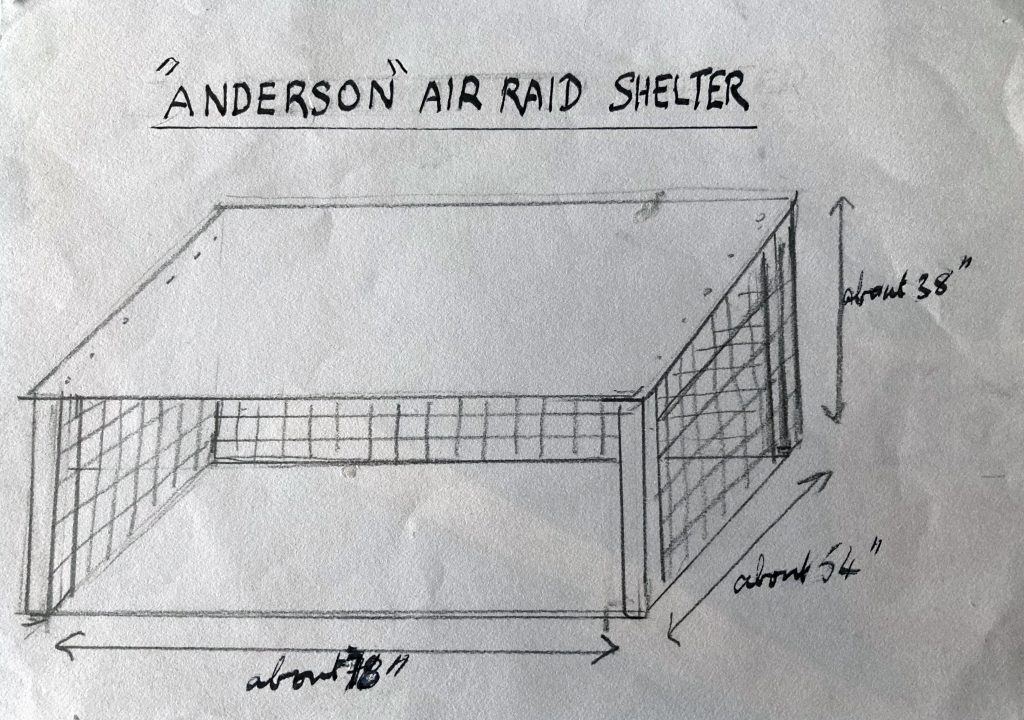
“During the war air raid shelters were available for the public—we had a Morrison. We had at that time been adopted by a small black and white cat which we called Whisky. She made good use of the air raid shelter. We kept one kitten as a home had been promised for it. Much to mother’s relief a farmer was happy to have a female cat (no splaying in those days).”
“My eldest brother, Herbert, was in the Merchant Navy. In the war the liner on which he served as Chief Officer was converted to a Troopship.
With a full complement of Troops at the end of May 1944 the ship was moored in the Thames awaiting orders to join the invasion of Europe. The Captain was given no forward information. The initial assault on the French coast had started on June 6th. As time went on there was concern that the ship might not have enough food to feed the troops for much longer. However, orders were given and the problem did not arise.”
During World War II our grandfather, Herbert (Bert) McNeil sailed in convoys carrying arms and supplies as part of the Battle of the Atlantic. As Chief Officer of the MV Saminvar, a Blue Star vessel, he took part in preparations for the Normandy landings which began in 1943. As Master of the MV Underwood, he died aged 60 on 6th January 1944 (presumed drowned) when his ship was torpedoed off the coast of Cornwall.
Gay wrote:
The Sinking of the MV Underwood
“The ship was in an unescorted convey carrying armaments. She had recently been adapted in the Naval Dockyard at Rosythe to take deck cargo. While off the coast of Cornwall she received a direct hit from a torpedo fired from a German ‘E’ boat. The ship sank—there were only two survivors, the Chief Engineer and a crewman. Sometime later my brother Reg chanced to meet the crewman who told my brother that the ship toppled over before she sank. The heavy deck cargo would make this more likely to happen. The ship was on its way from Northern Ireland to Southampton via the Irish Sea and the Channel. The armaments had been brought over from America to Northern Ireland where they were loaded on to small ships who took them to the South Coast in preparation for D-Day (June 6th 1945).”
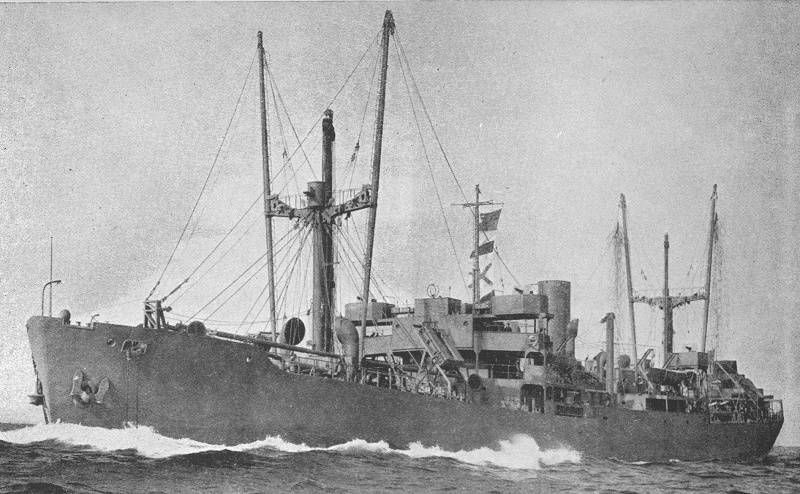
Account of the sinking of MV Underwood as found on Wrecksite.eu:
On the 6th January 1944 she was on passage from the Clyde for Portsmouth with government/military stores, including vehicles when she sank after a torpedo attack by German E-boat while in convoy. 15 crew and 3 passengers were lost.
https://wrecksite.eu/wreck.aspx?11846